_edited.jpg)
Menopause: A Critical Turning Point for Heart Health
- Feb 5
- 4 min read
Menopause is not only a reproductive milestone — it is one of the most significant cardiovascular transitions in a woman’s life.
Before menopause, women generally have a lower risk of cardiovascular disease than men of the same age. After menopause, that advantage narrows rapidly. In fact, heart disease becomes the leading cause of death in women, and the shift begins during perimenopause — often years before a woman’s final menstrual period.

This is not coincidental. It is biological.
The Hormonal Shift That Changes the Cardiovascular Landscape
Estrogen is not just a reproductive hormone. It is deeply involved in vascular biology, metabolic regulation, and inflammatory balance.
As estrogen levels decline, several interconnected physiological systems are affected:
1. Nitric Oxide and Vascular Function
Estrogen stimulates endothelial nitric oxide synthase (eNOS), the enzyme responsible for producing nitric oxide (NO) in blood vessels. Nitric oxide is a critical signaling molecule that:
Promotes vasodilation (keeps blood vessels flexible and open)
Improves circulation and oxygen delivery
Reduces platelet aggregation
Helps maintain healthy blood pressure
With declining estrogen, nitric oxide production often falls. This contributes to:
Increased vascular stiffness
Impaired endothelial function
Reduced blood flow to tissues, including the heart and brain
Endothelial dysfunction is considered one of the earliest steps in the development of atherosclerosis.
2. Lipids, Insulin Sensitivity, and Fat Distribution
Menopause is associated with measurable metabolic shifts:
LDL cholesterol often rises
HDL cholesterol may decline
Triglycerides can increase
Insulin sensitivity decreases
At the same time, fat distribution changes. Many women experience an increase in visceral (abdominal) fat, which is metabolically active and strongly linked to systemic inflammation and cardiometabolic disease.
These changes contribute to a higher risk of:
Hypertension
Type 2 diabetes
Metabolic syndrome
Coronary artery disease
Importantly, these processes often begin during perimenopause, when cycles are still occurring but hormone levels are fluctuating significantly.
3. Inflammation and Vascular Aging
Estrogen has anti-inflammatory and antioxidant effects. Its decline is associated with:
Higher levels of inflammatory markers
Increased oxidative stress
Accelerated vascular aging
Chronic low-grade inflammation plays a central role in plaque formation and progression of cardiovascular disease.
Menopause Symptoms Are Signals, Not Just Inconveniences
Hot flashes, night sweats, sleep disruption, mood changes, and brain fog are commonly discussed as “quality of life” issues. However, they often reflect deeper neurovascular and autonomic changes occurring at the same time that cardiovascular risk is rising.
For example, severe vasomotor symptoms have been associated in research with poorer vascular function and markers of cardiovascular risk. This reinforces the idea that menopause symptoms and heart health are biologically connected — not separate issues.
The Gap in Women’s Midlife Care
Healthcare has traditionally addressed menopause symptoms and cardiovascular risk in parallel, but rarely as part of one integrated physiological transition. Yet the same hormonal changes influencing sleep, mood, and temperature regulation are also shaping vascular function, metabolism, and inflammation.
This creates an opportunity: midlife is not only a time of increased risk, but also a powerful window for prevention and support.
Supporting Both Symptoms and Cardiovascular Resilience
+NO Berkeley Life® — Menopause and Heart Health Support addresses both menopause symptoms and cardiovascular wellness:
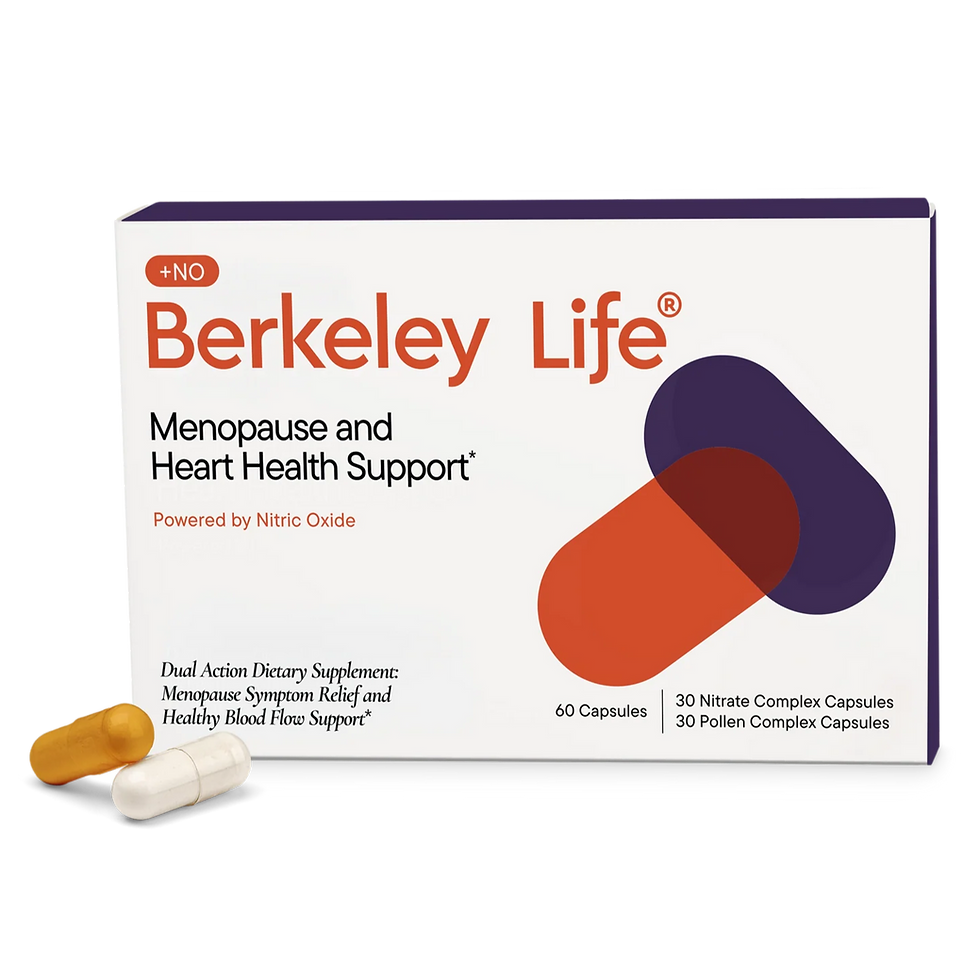
Clinically Guided Pollen Complex → Eases hot flashes, night sweats, irritability, and sleep changes.
Nitric Oxide Support Complex → Supports blood flow, natural energy, cognition, and heart health.
This dual-action formula addresses two key areas of need in women 45+, supporting daily quality of life while targeting the underlying vascular changes that influence long-term cardiovascular resilience.
🎁 Special offer with code UltimateWellness at berkeleylife.com
Berkeley Life’s Broader Focus
Berkeley Life’s core offerings center on nitric oxide and cardiovascular support:
Nitric Oxide Foundation — formulated to support natural NO production for circulation, vascular function, energy, and healthy aging
Menopause & Heart Health Support — dual-action support for menopause symptoms and cardiovascular wellness
Pollen Complex & Nutraceuticals — targeted formulations for immunity, energy, and overall wellness
Their work is widely used within functional and integrative health communities and reflects a growing recognition that one small molecule — nitric oxide — plays an outsized role in endurance, heart health, and healthy aging.
A Broader View of Menopause
Menopause should not be framed only as a decline. It is a physiological transition that reveals where support is most needed.
Understanding the heart–hormone connection reframes this stage of life as a critical moment to:
Support endothelial function
Address metabolic health
Reduce inflammation
Protect long-term cardiovascular resilience
When approached with science-informed strategies, midlife becomes not just a period of change — but a powerful opportunity to influence the trajectory of aging.
🎁 Special offer on all Berkeley Life products: Use code UltimateWellness at berkeleylife.com
💫 Join us at the Ultimate Wellness™ Conference 2026 and meet the Berkeley Life team in person at our expo!
📍 Faena Forum, Miami Beach | September 24–26, 2026
🎟 Grab discounted tickets with promo code UW2026: ultimatewellness.miami
✨ During this transformative wellness weekend, you will:
✔️ Learn from leading experts in biohacking, longevity, and wellness
✔️ Explore cutting-edge innovations in health tech and biotech
✔️ Immerse yourself in transformative experiences for holistic self-care and inner balance
💫 Sending Wholistic Health your way,
Julia Smila - Founder, Ultimate Wellness™


Comments